Loading...
First Round of Abstract Submission Ends: Dec 31, 2026
Extended Early Bird Ends: Dec 28, 2026

Keynote Speakers

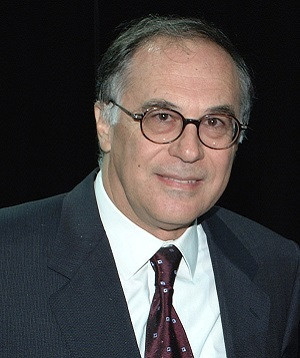
Prof. Panos Macheras
University of Athens (NKUA), Greece
Title: Finite-Time Pharmacokinetics and FTPK Software Enable Fast, Valid, and Cost-Effective Early Oral Drug Development.
He received his B. Pharm. (1970) and Ph.D. degree (1977) in Pharmaceutical Chemistry from the University of Athens, Greece. He also received a Ph.D. degree (1981) in Biopharmaceutics-Pharmacokinetics from King's College (formerly Chelsea College), University of London, U.K. He has published more than 190 journal articles (>10000 citations, h =47) and seven books in the field of Biopharmaceutics-Pharmacokinetics. His research interests include experimental, theoretical and computational (modeling and simulation) studies on drug dissolution, release, gastrointestinal absorption, protein binding, drug-cyclodextrins interaction, formulation work, bioequivalence, biopharmaceutic classification of drugs, pharmacokinetics, population pharmacokinetics, fractal and fractional kinetics, applications of fractal concepts in biopharmaceutical systems and nonlinear dynamics. In 2019, he introduced the Finite Absorption Time (F.A.T.) concept, which reliably accelerates drug and generic drug development. He serves on the Editorial Board of journals: Pharmaceutical Research, International Journal of Pharmaceutics and European Journal of Pharmaceutical Sciences.
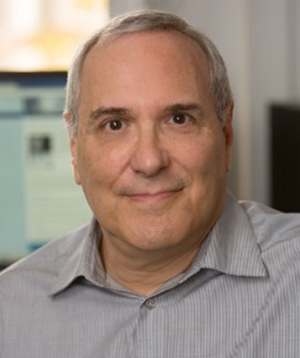
Prof. Paul Insel
University of California, San Diego, USA
Title: G Protein-Coupled Receptors as Novel Targets for Cancers
Dr. Paul A. Insel received an M.D. cum laude from the University of Michigan and post-MD training at Boston City Hospital (Harvard Medicine Service), National Institute of Health, and the University of California San Francisco. He has been at the University of California San Diego (UCSD) since 1978 and is a Distinguished Professor of Pharmacology and Medicine. Dr. Insel was the Director/Co-Director of the UCSD MD/PhD Training Program from 1989-2025. He has received an honorary Doctorate from the University of Paris, is an elected Fellow of the American Association for Advancement of Science and several scientific societies, from which he has also received multiple awards. He has been an editor-in-chief of several scientific journals, including the Journal of Clinical Investigation, Molecular Pharmacology and American Journal of Physiology-Cell Physiology and since 2011, of the Annual Review of Pharmacology and Toxicology. His research has focused on G-protein-coupled receptors (GPCRs): expression, actions, regulation, and roles in health and disease. Dr. Insel created GPCRomics (GPCRs endogenously expressed in cells/tissues) and discovered GPCRs as novel therapeutic targets for cancers. He has published more than 300 original articles and 200 invited publications and holds several patents.
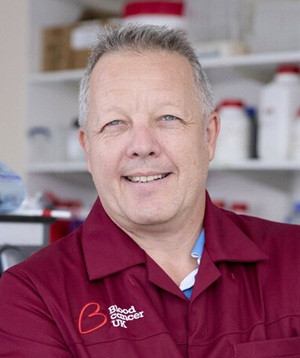
Prof. John Spencer
University of Sussex, UK
Title: Fun with Crude Chemical Libraries and Inactive PROTACs
John Spencer is a medicinal and bioorganic chemist with over three decades of experience spanning academia, industry, and translational drug discovery. He has an extensive track record of leading multidisciplinary research programmes, securing major funding from national and international bodies, and delivering impactful outputs across synthetic chemistry, chemical biology and drug discovery. His work has resulted in over 200 publications, 13 patents, an H‑index of 48, and over 11,500 citations, reflecting sustained scientific influence and international standing. He was awarded the Royal Society of Chemistry Bader Prize in 2026 for his contributions to clinical candidates. He is currently Director of Medicinal Chemistry, and previously Director of the Sussex Drug Discovery Centre (SDDC).

Professor Spencer’s research portfolio integrates synthetic organic chemistry, fragment‑based design, structure‑guided medicinal chemistry and DMPK profiling. He has directed major programmes in fragment‑based drug discovery, and his broader research includes PROTAC design with novel linkerology (Royal Society-funded), p53 mutant rescue (Worldwide Cancer Research-funded), antimicrobial resistance. Professor Spencer has been awarded multi‑million‑pound research income, e.g., from Blood Cancer UK, CRUK, BBSRC, EPSRC, the Royal Society, and multiple industry partners and his work bridges academia and industry.

Before joining Sussex in 2012, he spent six years at the University of Greenwich as Reader in Medicinal Chemistry, was team‑leader in medicinal chemistry at the James Black Foundation, Thrombosis Research Institute, Cerebrus Ltd, and Xenova Ltd, contributing to the invention, optimisation, and progression of multiple clinical and preclinical candidates, including a serine protease inhibitor that reached Phase II trials (TRI50b) and a Phase I CCK2 antagonist.

Professor Spencer completed postdoctoral training at the ETH Zurich as a CHIRAL‑2 Fellow (Togni), working on metallocene ligand synthesis, asymmetric catalysis, and industrial collaboration with Ciba‑Geigy. He holds a PhD in Organic Chemistry from Université Louis Pasteur, Strasbourg (Pfeffer), funded by the EU, and a First Class BSc in Chemistry with European Studies from the University of Sussex.
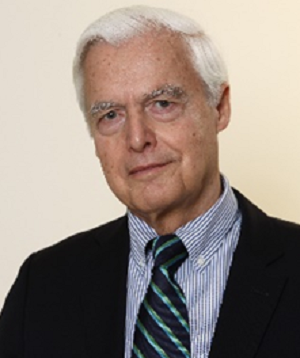
Prof. Michael Oellerich
George-August University, Germany
Title: Donor-derived cell-free DNA for personalized immunosuppression in transplantation
Michael Oellerich, MD, HonMD, FADLM, FAMM, FFPath (RCPI), FRCPath, is a chemical pathologist and Distinguished Research Professor at the Department of Clinical Pharmacology, Medical Faculty (UMG), George-August University, Göttingen, and a consultant to iMDx, Nashville, Tennessee. He previously served as Lower Saxony Professor of Clinical Chemistry (2012–2017), Chairman of the Department of Clinical Chemistry/Central Laboratory (1991–2012), and Dean of the Faculty of Medicine.

An internationally recognized leader in therapeutic drug monitoring and precision diagnostics, Dr. Oellerich has advanced clinical implementation of cell-free DNA analytics, including cfDNA in oncology and donor-derived cfDNA in transplantation. His record includes more than 500 peer-reviewed publications, an H-index of 81, and over 21,986 citations.

Dr. Oellerich has held presidencies of multiple national and global organizations (IATDMCT, DGLM, DGKL, WASPaLM) and was Editor-in-Chief of Therapeutic Drug Monitoring (2003–2018), where he continues to serve as Associate Editor. His contributions have been recognized with numerous honors, including the Ludolf-Krehl Award, IATDMCT Charles Pippenger Award, WASPaLM Medal of Honor, WASPaLM Gold-Headed Cane, F. McCreary Prize (UBC Health, 2022), and the Claus Roxin Award (2023).