First Round of Abstract Submission Ends: Dec 31, 2026
Extended Early Bird Ends: Dec 28, 2026
Plenary Speakers
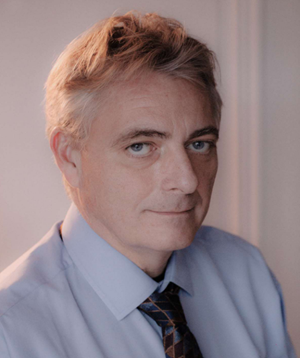
Prof. Guido Kroemer
Universite Paris Cite, France
Title: Inhibition of ACBP/DBI for the prevention and treatment of age-related diseases
Guido Kroemer is currently Professor at the Faculty of Medicine of the University of Paris–Cité, Director of the research team Metabolism, Cancer and Immunity of the French Medical Research Council (INSERM), Director of the Metabolomics and Cell Biology Platforms at the Gustave Roussy Comprehensive Cancer Center, and Hospital Practitioner at the Hôpital Européen Georges Pompidou in Paris, France.
Dr. Kroemer’s research focuses on the pathophysiological implications of cellular stress and death in aging, cancer, and inflammation. He discovered the central role of mitochondrial membrane permeabilization in triggering regulated cell death pathways, elucidated the cytoprotective and anti-aging functions of autophagy, and identified the decisive contribution of immunogenic cell death to the success of anticancer therapies.
With over 1,800 scientific articles—including 77 in CNS journals (Cell, 17; Nature, 7; Nature Medicine, 26; Science, 18; Science Translational Medicine, 9)—more than 486,000 citations, and an h-index of 315, he is Europe’s most cited biomedical researcher and the world’s most cited scientist in biology and biochemistry (https://research.com/scientists-rankings/biology-and-biochemistry). Kroemer is the founding Editor-in-Chief of seven journals (Cell Death & Disease, Cell Stress, Geromedicine, OncoImmunology, MedComm Oncology, Microbial Cell, and Molecular & Cellular Oncology) and currently serves as Editor-in-Chief of Seminars in Immunology.
Dr. Kroemer is a member of the Academia Europaea; the Austrian, Chilean, Chinese (Engineering), German (Leopoldina), Serbian, and Spanish Royal Academies of Sciences; as well as the European Molecular Biology Organization (EMBO), the European Academy of Cancer Sciences (EACS), the European Academy of Engineering (EAE), the European Academy of Sciences (EAS), and the European Academy of Sciences and Arts (EASA). He is the Founding President of the European Academy of Tumor Immunology (EATI) and President of the European Network for Cancer Immunotherapy (ENCI).
Dr. Kroemer’s contributions have been recognized with numerous distinctions, including the European Union–sponsored Descartes Prize and two European Research Council Advanced Investigator Awards. He has also received the most prestigious cancer research honors from Belgium (Baillet-Latour Health Prize), France (Grand Prix Ruban Rose, Prix Duquesne, Prix Léopold Griffuel), Spain (Ramiro Carregal Prize, PharmaMar Basic Research Award) and Switzerland (Brupbacher Prize), as well as the most generously endowed national science awards from Italy (Lombardia è Ricerca Prize) and Portugal (BIAL Biomedical Research Award).
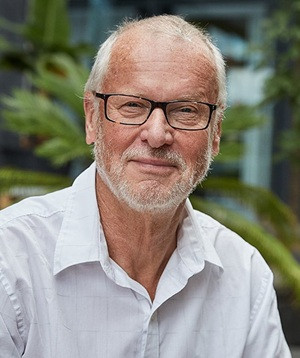
Prof. Reinhard H.H. Neubert
Martin Luther University Halle-Wittenberg, Germany
Title: To be confirmed.
Will update soon.
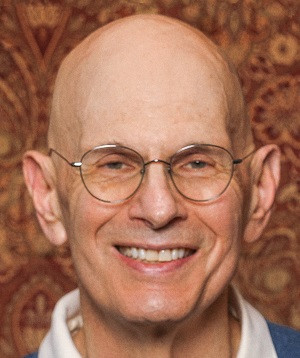
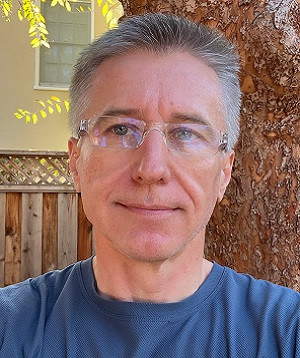
Prof. Richard B. Mailman
USA
Title: New drugs ask: Do we need to ‘cure’ Parkinson’s disease?
Dr. Richard B. Mailman is Professor of Pharmacology and Neuroscience at the University of Virginia School of Medicine, Distinguished Professor Emeritus at the Penn State University, and Emeritus Professor at the University of North Carolina-Chapel Hill. He is the author of more than 300 research papers and an inventor of seven patents. He is a Fellow of the American College of Neuropsychopharmacology and the American Association for the Advancement of Science and has received several awards including the Society of Toxicology’s Burroughs-Wellcome Scholar in Toxicology Award, the Hargraves Award in Mental Health Research, and the Distinguished Alumni Award from North Carolina State University. He has been a distinguished visiting professor at Purdue University, King’s College London, and the University of Oslo, and has won numerous teaching awards at Penn State University and the University of North Carolina.
He was a pioneer in discovering and disseminating the concept of drug functional selectivity/signaling bias, and showing how this mechanism affected the actions of drugs, including the approved antipsychotic aripiprazole. He was the first to understand that the principal mechanism of why levodopa was the gold standard drug for Perkinson’s disease was actions at dopamine D1, not D2/3 receptors as commonly believed. He tested this hypothesis from drug design to lab to clinic. His research was the foundation that led to the discovery and development of tavapadon, a selective D1 partial agonist that a soon be the first-in-class drug after positive Phase 3 clinical trials. His current research involves the design of novel compounds for CNS disorders, and also understanding how environmental factors and current drug treatments influence the risk and progression of Parkinson’s disease and related disorders.
Prof. Juan Segura-Aguilar
University of Chile, Chile
Title: To be confirmed.
Will update soon.
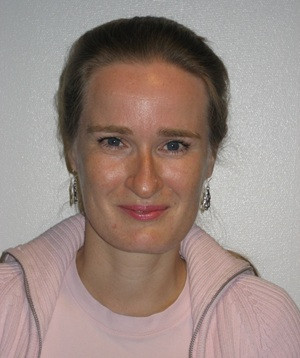
Prof. Leena Peltonen
University of Helsinki, Finland
Title: Enabling drug forms ensuring higher bioavailability?
Professor Leena Peltonen has educational background both in physical chemistry and in pharmacy. She received the doctoral degree in 2001, and the title of docent in 2004 from the area of pharmaceutical technology in the University of Helsinki, Finland. After her dissertation she initialized the nanotechnological research in the Division of Pharmaceutical Technology, University of Helsinki, and she is currently Professor in Pharmaceutical Technology in Division of Pharmaceutical Chemistry and Technology, Faculty of Pharmacy, University of Helsinki. Her main research areas are nanoparticles, new excipients, solubility enhancing technologies, physicochemical analysis, dissolution and solubility testing and physical pharmacy. She has published more than 110 peer-reviewed scientific articles, 12 book chapters and 2 patents.
Prof. Andrej Sali
University of California, USA
Title: From integrative structural biology to cell biology
Andrej Sali received his BSc degree in chemistry from the University of Ljubljana, Slovenia, in 1987, working on the sequence-structure-function relationship of stefins and cistatins under the supervision of Professor Vito Turk; and his PhD from Birkbeck College, University of London, UK, in 1991, developing the MODELLER program for comparative modeling of protein structures under the supervision of Professor Tom L. Blundell. He was then a postdoc with Professor Martin Karplus at Harvard University as a Jane Coffin Childs Memorial Fund fellow, studying lattice Monte Carlo models of protein folding. From 1995 to 2002, he was first an Assistant Professor and then an Associate Professor at The Rockefeller University. In 2003, he moved to University of California, San Francisco, as a Professor of Computational Biology in the Department of Bioengineering and Therapeutic Sciences, Department of Pharmaceutical Chemistry, and California Institute for Quantitative Biosciences (QB3). He was recognized as Sinsheimer Scholar (1996), an Alfred P. Sloan Research Fellow (1998), an Irma T. Hirschl Trust Career Scientist (2000), the Zois Award of Science Ambassador of Republic of Slovenia (2007), a Fellow of International Society for Computational Biology (2014), Jubilee Professor of Indian Academy of Sciences (2017), Bijvoet Medal recipient (2018), and member of National Academy of Sciences of USA (2018). He was an Editor of Structure from 2002 to 2021. He is also a Founder of Prospect Genomix that merged with Structural Genomix (2001) and was acquired by Eli Lilly Inc. in 2008; and of Global Blood Therapeutics (2012) that was acquired by Pfizer Inc. in 2022. Dr. Sali develops, applies, and disseminates computational methods for determining and modulating structures and functions of proteins and their assemblies.
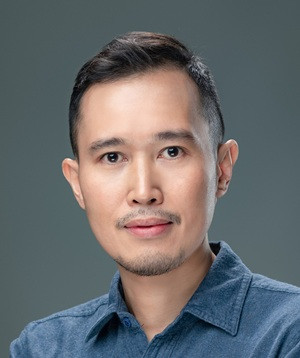
Prof. Hang Fai Kwok
University of Macau, Macao
Title: Exploring New Cures from Animal Venoms in Medicinal Chemistry and Drug Discovery to Combat Diseases: How Does It Work
Hang Fai (Henry) Kwok is currently the Department Head and a Professor in the Faculty of Health Sciences at the University of Macau (UM). Before joining UM in 2014, he served as a Senior Research Fellow in the Department of Oncology at the Cancer Research UK Cambridge Institute at the University of Cambridge. His research focuses on proteins (antigens), venom-based peptides, and antibodies for targeted therapy and immunotherapy, with the aim of developing novel prototype drugs and treating cancer. In 2022, Henry was elected a Fellow of the Royal Society of Biology (FRSB) and a Fellow of the Royal Society of Chemistry (FRSC). In 2024 and 2025, he was included on the list of the World's Top 2% of Scientists.
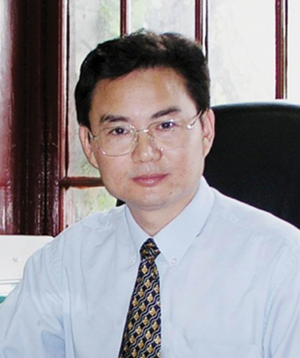
Prof. Ren-Xiang Tan
Nanjing University, China
Title: Natural Drug‑like Molecules: Discovery and Sustainable Supply
Prof. Tan Renxiang was awarded the “Distinguished Young Scholar” by National Natural Science Foundation in 1997, and the Specially Appointed Professor in the Chang Jiang Scholar Program of the Ministry of Education in 2000. He was granted the Innovation Group Science Fund from National Natural Science Foundation in 2008.
He received his Bachelor’s degree in Chinese Pharmacology from China Pharmaceutical University in 1983, and received his Master’s degree in Chinese Medicinal Chemistry from the same university. In 1986, he began his doctorate study in Chemistry in Lanzhou University. From 1989 to 1990, he completed his PhD dissertation in Institute of Organic Chemistry at Technical University of Berlin, Germany. From 1990 to 1992, he engaged in the post-doc work in Lanzhou University. Prof. Tan joined the faculty in Nanjing University since 1992 and went through the rise in academic ranks from associate professor to professor and doctorate supervisor. He also successively held administrative roles in Nanjing University as department’s Director, Deputy Dean, Acting Dean and Associate Vice-President. Prof. Tan served as Vice President of NJUCM from May 2016 to October 2019.
Prof. Tan has been dedicated to the research on natural medicinal chemistry. He has presided over and completed main project and key project included in national 863 plan, as well as key projects granted by National Natural Science Foundation. He has published over 260 papers in a broad range of journals such as Nat. Commun., Proc. Natl. Acad. Sci. USA, J. Am. Chem. Soc., Angew. Chem. Int. Ed., Nat. Prod. Rep., Chem. Rev., et. al. He has published 4 monographies as editor-in-chief, and has 26 authorized invention patent. As the first completer, he has been awarded the first prize for scientific and technological findings by Ministry of Education in 2005 and 2007, Natural Product Reports Lecture Award conferred by Royal Society of Chemistry, UK, the second prize of National Natural Science in 2009 etc.
Prof. Tan currently serves as a Fellow of Royal Society of Chemistry, a member of Expert Advisory Committee of National Natural Science Foundation of China, a member in the editorial committee for SCI journal of Natural Product Reports. He had once been the Chair of International Association of Natural Products, a member to the fourth and fifth S&T Committee for Life Science, a member of editorial committee for Chinese Journal of Antibiotics.
Prof. Michal Schwartz
Weizmann Institute of Science, Israel
Title: Programming the Immune System to Defeat Alzheimer’s Disease: From Bench to Bedside
Professor of Neuroimmunology at the Weizmann Institute of Science. Schwartz is the world pioneer in breaking the long-held dogma regarding the relationships between the central nervous system and the immune system. She introduced the current understanding that systemic immune cells are guardians of the brain, needed for life-long brain maintenance and repair. Based on her comprehension of the brain-immune relationship, she proposed that senescence or exhaustion of the immune system plays a key role in brain aging, and in exacerbating Alzheimer’s disease (AD) and other forms of dementia. She suggested a novel treatment for AD, currently in clinical trial, to harness the immune system to help the brain. The impact of her scientific insights is reflected in her extensive publication record in leading journals and high citation number (H factor 127, Google Scholar; more than 66,000 citations), and the number of invited lectures that she delivered. Schwartz received numerous prestigious national and international awards for her outstanding achievements. Most recently, in 2019, Schwartz received the EMET prize, one of the most prestigious Israeli awards for academic achievement, and the FENS EJN Award, 2022 for her outstanding contribution to the field of Neuroimmunology. In 2023, she was awarded the Israel Prize in life sciences, an award bestowed by the State of Israel, and regarded as the state's highest honor. She served as elected president of the International Society of Neuroimmunology (2016-2018). Tweny of her former trainees currently hold academic faculty positions in Israel, the USA, UK, Europe and Australia. She is the scientific co-founder of the biopharmaceutical company ImmunoBrain, which is built on her technology. The company recently completed a Phase 1b clinical trial in Alzheimer’s disease (AD) with encouraging results that tested the immunotherapy she developed across sites in the UK, Israel, and the Netherlands. Published last month in Nature medicine.